If you’ve ever watched travel photographers on YouTube or scrolled through Instagram, you’d be forgiven for thinking every great travel photo comes from three mornings of perfect light, endless patience and a carefully planned shoot. The reality is usually very different.
Most of us are travelling with a partner, family or a tour group. You’ve got 30 or 40 minutes before everyone starts asking, “Are you ready yet?” The ferry leaves in an hour. The tour bus isn’t waiting. The light is harsh, the streets are crowded, and there’s a queue of people standing exactly where you want to compose and shoot.
Sound familiar... that’s travel photography!
Unlike a landscape photographer who can return to the same location for sunrise after sunrise, travel photographers usually get one opportunity. One walk through a location. One chance to capture what they see before it’s time to move on. And that’s perfectly okay. The aim isn’t to create the next National Geographic cover. It’s about coming home with photographs that remind you of the experience and tell the story of your journey.
No Pressure
First things first… take the pressure off yourself. Unless someone is paying you to be there, you’re on holiday. Photography should add to your travel experience, not become a source of stress.
I see so many people arrive somewhere beautiful, spend ten frantic minutes taking hundreds of photos from the same viewpoint as everyone else, then walk away without actually experiencing the place.
Slow down. Take a breath. Look around. Enjoy where you are before lifting the camera to your eye. Ironically, that’s often when the better photographs start appearing.
Do Your Homework
A little research before you arrive can make a huge difference. These days it only takes a couple of minutes to search online or ask an AI assistant something like:
“Tell me the best things to do and photograph in Dubrovnik Old Town if I only have two hours.”
You’ll instantly receive ideas for viewpoints, interesting streets, local landmarks, quieter areas and even suggestions for the best times of day. Rather than wandering aimlessly, you’ll arrive with a simple game plan.
That doesn’t mean sticking to a rigid schedule. It simply means you’ve already done some of the thinking before you arrive, leaving more time to enjoy photographing the location.
(Insert ChatGPT screenshot here.)
Before You Touch the Camera
Here’s something I do almost every time I arrive somewhere new. I don’t take the camera out immediately. Instead, I spend a few minutes simply walking around.
I look for interesting light
I watch how people move through the scene
I notice details that most visitors walk straight past
Most importantly, I start asking myself one question…
“What’s the story here?”
Every destination has one.
It might be the bustling cafés spilling into narrow laneways
The fishing boats returning to the harbour
The worn stone steps polished smooth by thousands of years of footsteps
The smell of fresh coffee as locals chat outside the cafe
The way afternoon light catches an old church tower
Those little observations become the foundation of your photography.
Think Like a Storyteller
Travel photography isn’t really one genre, it’s a combination of many:
Landscape
Architecture
Street photography
Food
Portraits
Details
Wildlife
Culture
Together they tell the story of the place you’ve visited.
Rather than trying to capture one spectacular image, think about creating a collection of photographs that work together. Imagine you’re showing a friend what your day was like. What photographs would you include?
Shoot a Variety of Images
One of the easiest ways to improve your travel photography is to stop photographing everything from the same standing position.
Instead, capture a variety of images.
Start with a wide scene that establishes the location
Move in closer to photograph details that people often miss
Include people interacting with the environment
Look for interesting textures, colours and patterns
Photograph the local food
Take a portrait
Capture a moment rather than just a place.
When you later put these images together, whether on Facebook, Instagram or a printed travel book, they create a far richer story than twenty similar wide-angle shots.
I often use Facebook’s four-image gallery layout to tell the story of a location. One image might establish the scene, another captures local life, a third focuses on architecture, while the final image highlights a small detail that many visitors overlook. Each photograph adds another chapter to the story.
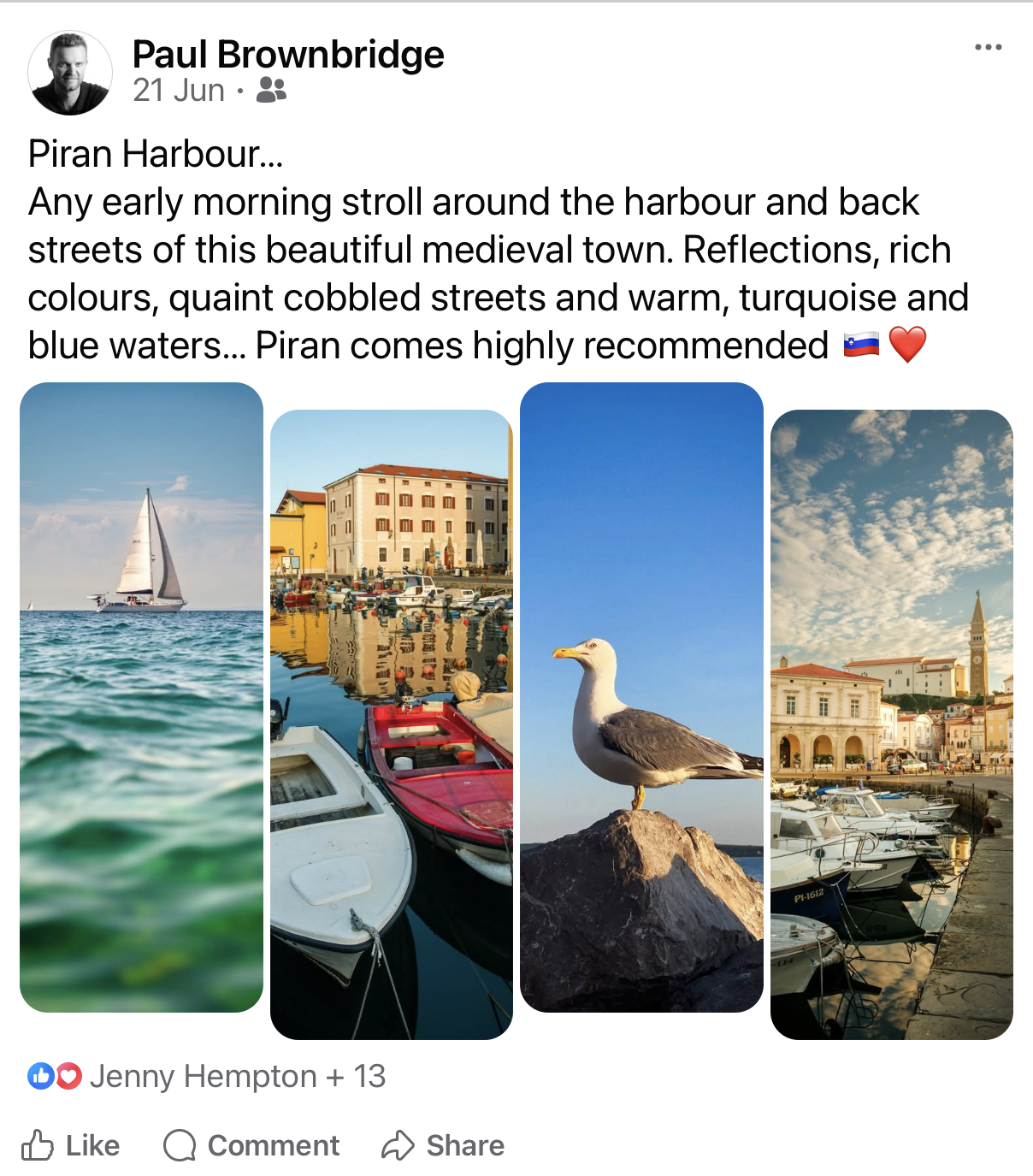
Using Facebook’s four-image gallery layout to tell the story of a location can be a useful tool to enhance your storytelling..
What’s Next?
Once you begin thinking about storytelling instead of individual photographs, you’ll naturally start paying more attention to how you compose each image and why you choose certain viewpoints.
In the next articles we’ll explore two of the biggest skills that can instantly improve your travel photography:
How to use composition techniques like the Rule of Thirds, Leading Lines and Frame Within a Frame to guide your viewer’s eye.
How varying your shot angles, focal lengths and subject choices creates stronger visual stories that keep people engaged from the first photo to the last.
Because great travel photography isn’t about getting lucky. It’s about making the most of the short amount of time you have in every destination.